Digital marketing has become an essential part of how businesses attract customers, build trust, and generate sales online. Whether you run a small business, an e-commerce store, a startup, or a personal brand, digital marketing can help you reach people where they spend much of their time: online.
Unlike traditional marketing, digital marketing uses internet-based channels such as search engines, social media, websites, email, online advertising, and content platforms. The goal is not simply to get more visitors but to connect with the right audience, provide useful information, and turn visitors into customers.
In this guide, you will learn what digital marketing is, how it works, its major types, important strategies, benefits, common mistakes, and answers to frequently asked questions.
What Is Digital Marketing?
Digital marketing is the promotion of products, services, brands, or businesses through digital channels. These channels can include search engines, websites, social media networks, email, mobile applications, video platforms, and online advertising.
A digital marketing strategy typically combines several methods rather than relying on one channel. For example, a business may publish SEO-friendly blog posts to attract search traffic, use social media to build awareness, and use email marketing to maintain relationships with existing customers.
The main purpose of digital marketing is to reach a relevant audience, communicate value, encourage action, and measure the results.
How Does Digital Marketing Work?
Digital marketing generally follows a customer journey:
- Awareness: A potential customer discovers a brand through search, social media, advertising, or content.
- Interest: The person explores the website, reads content, watches videos, or compares options.
- Consideration: The visitor evaluates whether the product or service meets their needs.
- Conversion: The visitor takes an action such as making a purchase, submitting a form, or contacting the business.
- Retention: The business continues communicating with the customer through email, content, social media, or other channels.
This process helps businesses understand what customers need at different stages.
Why Is Digital Marketing Important?
The internet has changed how people research products and services. Customers can compare businesses, read reviews, watch demonstrations, and search for solutions before making purchasing decisions.
Digital marketing allows businesses to participate in this journey.
One major advantage is measurability. Businesses can track metrics such as website traffic, search impressions, engagement, leads, conversions, and advertising performance. This information can be used to improve campaigns and allocate resources more effectively.
Digital marketing can also provide opportunities for smaller businesses to reach specific audiences without depending entirely on large traditional advertising campaigns.
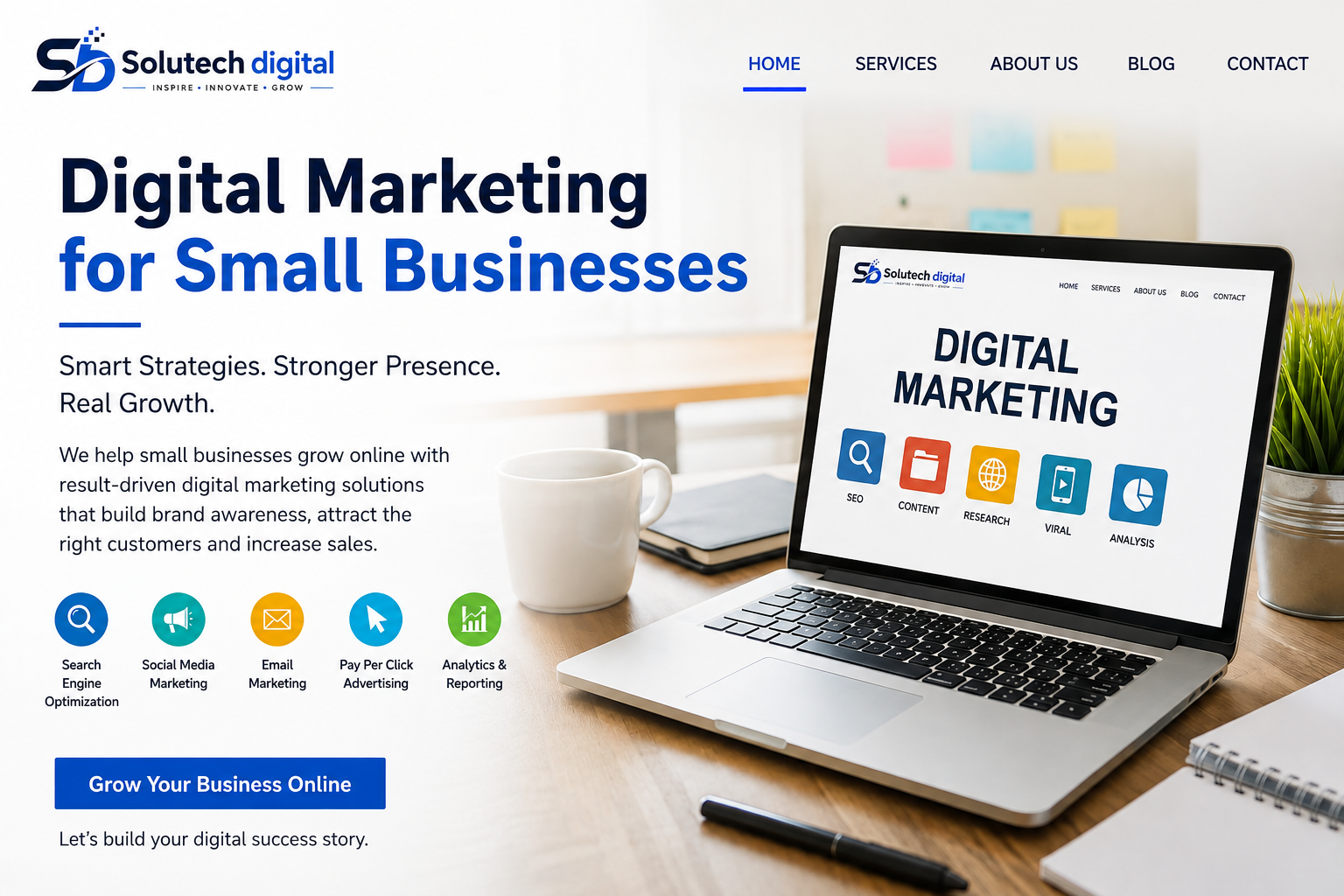
Types of Digital Marketing
Digital marketing includes several specialized areas. Each channel has a different purpose, and businesses often combine them as part of a broader strategy.
1. Search Engine Optimization (SEO)
Search engine optimization, commonly called SEO, focuses on improving a website’s visibility in search engine results.
SEO can involve:
- Keyword research
- Helpful and relevant content
- On-page optimization
- Internal linking
- Technical SEO
- Website performance
- Mobile usability
- Structured data
- Earning relevant backlinks
For example, a technology website could create an in-depth guide targeting the search query “digital marketing strategies for small businesses.”
SEO is generally a long-term strategy. Consistent publishing, technical improvements, useful content, and a strong website experience can help a site build organic search visibility over time.
2. Content Marketing
Content marketing involves creating and distributing useful information for a specific audience.
Common content formats include:
- Blog articles
- Guides
- Tutorials
- Case studies
- Videos
- Infographics
- Ebooks
- Checklists
- Frequently asked questions
Good content should answer real questions rather than being created only to insert keywords. Search engines increasingly aim to provide users with useful, relevant results, so content quality and usefulness matter.
3. Social Media Marketing
Social media marketing uses platforms such as Facebook, Instagram, LinkedIn, TikTok, and other social networks to communicate with audiences.
Businesses can use social media to:
- Share educational content
- Introduce products
- Answer customer questions
- Build brand awareness
- Promote website content
- Communicate announcements
- Engage with communities
The most suitable platform depends on the audience, business type, content format, and marketing objectives.
4. Email Marketing
Email marketing allows businesses to communicate directly with people who have chosen to receive their messages.
Email campaigns can include:
- Newsletters
- Product updates
- Educational content
- Special offers
- Welcome sequences
- Customer follow-ups
Effective email marketing focuses on relevance and value instead of sending unnecessary messages.
5. Pay-Per-Click Advertising
Pay-per-click, or PPC, advertising allows businesses to pay for online advertisements that can appear on search engines, websites, social platforms, and other digital channels.
Unlike organic SEO, paid advertising can provide visibility through advertising placements while a campaign is active.
PPC performance can be evaluated using metrics such as impressions, clicks, click-through rate, conversion rate, and cost per conversion.
6. Affiliate Marketing
Affiliate marketing involves partnerships where individuals or organizations promote products or services and receive compensation according to agreed terms, often based on sales or other measurable actions.
It can help businesses expand their reach through external publishers, creators, websites, and communities.
7. Influencer Marketing
Influencer marketing involves collaborating with creators who have an established audience.
The success of an influencer campaign depends on factors such as audience relevance, credibility, content quality, disclosure practices, and campaign objectives—not simply the number of followers.
Digital Marketing Strategy: Step-by-Step
A successful digital marketing strategy should begin with clear objectives rather than immediately choosing platforms.
Step 1: Define Your Target Audience
Identify who you want to reach.
Consider:
- Age group
- Location
- Interests
- Problems
- Search behavior
- Purchasing needs
- Preferred content formats
A clear audience makes content and messaging more focused.
Step 2: Set Measurable Goals
Your goals could include:
- Increasing organic traffic
- Generating leads
- Increasing online sales
- Building brand awareness
- Growing an email list
- Improving customer retention
A measurable goal makes it easier to evaluate performance.
Step 3: Research Keywords and Topics
Keyword research helps identify what your target audience searches for online.
Instead of focusing only on broad keywords, consider long-tail queries that reflect specific user needs.
For example:
Broad keyword: Digital Marketing
Long-tail keywords:
- Digital marketing strategies for small businesses
- How to learn digital marketing
- Digital marketing services for startups
- Digital marketing tips for beginners
- Importance of digital marketing for businesses
Long-tail keywords can help create content around specific search intent.
Step 4: Create Helpful Content
Develop content that directly addresses the questions and problems of your audience.
A strong article should have:
- A clear title
- A useful introduction
- Logical headings
- Short paragraphs
- Relevant examples
- Natural keyword usage
- Internal links
- Useful external references when appropriate
- A clear conclusion
Avoid forcing keywords into every paragraph. Semantic relevance and natural language are more useful than keyword repetition.
Step 5: Optimize the User Experience
Search optimization is not only about rankings. Visitors also need a website that is easy to use.
Focus on:
- Fast-loading pages
- Mobile-friendly design
- Clear navigation
- Readable typography
- Descriptive headings
- Helpful calls to action
- Accessible content
- Secure website connections
A visitor who cannot easily find information may leave even if the page attracts search traffic.
Step 6: Measure and Improve
Review performance regularly.
Useful measurements can include organic search traffic, engagement, conversions, leads, email performance, and advertising costs.
The purpose of analytics is not simply to collect numbers. It is to understand what is working and identify areas that need improvement.
Digital Marketing for Small Businesses
Small businesses can use digital marketing to build visibility without trying to compete everywhere at once.
A practical starting strategy might include:
- Build a professional website.
- Create useful SEO content.
- Set up relevant business profiles.
- Maintain an active social media presence.
- Build an email list where appropriate.
- Track important conversions.
- Improve content based on audience behavior.
For a small technology blog, for example, publishing detailed tutorials and answering specific technology questions can create opportunities to attract visitors through search engines.
Common Digital Marketing Mistakes
Digital marketing can become ineffective when businesses focus on shortcuts instead of sustainable practices.
Common mistakes include:
Keyword Stuffing
Repeating the same keyword excessively can make content difficult to read and may create a poor user experience.
Creating Content Without Search Intent
An article may contain keywords but still fail to satisfy what the searcher actually wants.
Ignoring Mobile Users
Many people access websites from mobile devices. Poor mobile usability can negatively affect the overall experience.
Focusing Only on Traffic
Traffic is useful, but it is not the only objective. Businesses should also consider leads, sales, engagement, and customer relationships.
Publishing Low-Quality Content
Publishing large quantities of shallow or repetitive articles does not automatically create strong search visibility.
Useful, original, accurate, and audience-focused content provides a stronger foundation.
Future of Digital Marketing
Digital marketing continues to evolve as search technology, social platforms, advertising systems, analytics, and consumer behavior change.
Businesses increasingly need to focus on first-hand expertise, trustworthy information, strong user experiences, useful content, and clear brand communication.
Search experiences are also becoming more answer-oriented. This makes it important to structure content so that important questions receive direct, understandable answers while the rest of the article provides useful depth.
For website owners, the long-term focus should be on helping users rather than trying to manipulate search systems.
Frequently Asked Questions About Digital Marketing
What is digital marketing in simple words?
Digital marketing means promoting a business, product, service, or brand using internet-based channels such as search engines, websites, social media, email, content, and online advertising.
Why is digital marketing important for businesses?
It helps businesses reach online audiences, communicate with potential customers, build visibility, generate leads, and measure marketing activity through digital data.
What are the main types of digital marketing?
The major types include SEO, content marketing, social media marketing, email marketing, PPC advertising, affiliate marketing, and influencer marketing.
Is SEO part of digital marketing?
Yes. SEO is one of the major components of digital marketing. It focuses on improving a website’s visibility in organic search results.
Can small businesses use digital marketing?
Yes. Small businesses can use SEO, content marketing, social media, email, local search strategies, and paid advertising according to their audience and resources.
How long does digital marketing take to produce results?
There is no single timeframe. Results depend on the marketing channel, competition, website condition, content quality, budget, audience, and consistency. Paid campaigns can generate measurable activity quickly, while SEO and content marketing often require sustained effort.
What skills are useful for digital marketing?
Useful skills include SEO, content writing, keyword research, analytics, social media management, email marketing, advertising, conversion optimization, communication, and strategic planning.
Conclusion
Digital marketing is a broad field that combines multiple online channels to help businesses reach and communicate with their audiences. SEO, content marketing, social media, email, PPC, affiliate marketing, and influencer marketing can all contribute to a digital marketing strategy.
The most sustainable approach is to understand your audience, identify their needs, create genuinely useful content, provide a strong website experience, measure meaningful results, and continuously improve.
Whether you are building a small business website, an e-commerce store, or a technology blog such as SolutechDigital, a well-planned digital marketing strategy can provide a structured way to build online visibility and connect with your target audience.